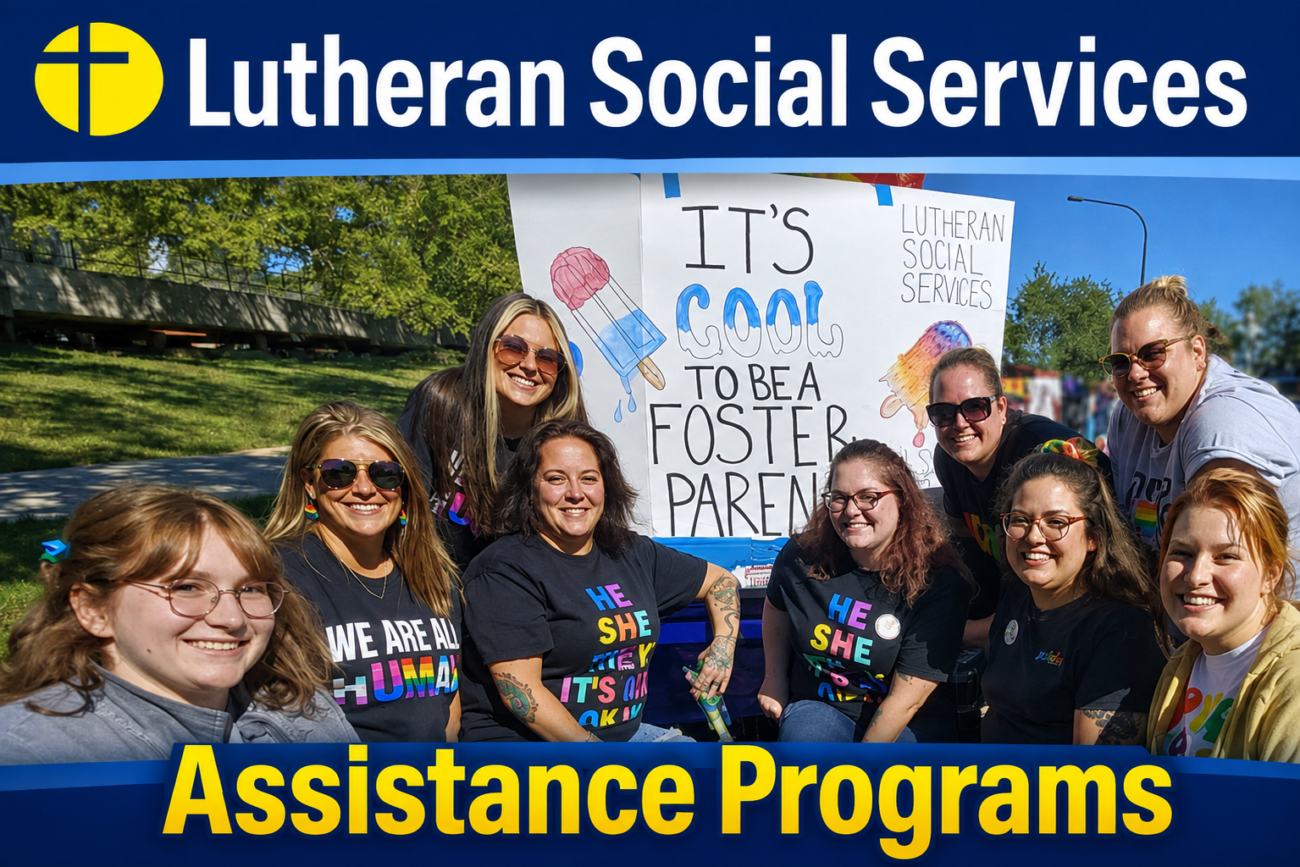
Lutheran Social Services (LSS) is a vast network of independent, faith-based non-profit organizations operating across the United States to provide essential health, financial, and social services. Since programs are managed regionally by local affiliates—such as Lutheran Social Service of Minnesota or Lutheran Social Services of Southern California—the specific services offered depend on the particular location. However, most LSS regional offices provide a core set of stabilization and support services.
Eviction Prevention, Transitional and Subsidized Housing
Lutheran Services in America (LSA) manages housing stability efforts through its national Housing Solutions Collaborative initiative. Across the country, local LSS affiliates utilize a specific multi-tiered system to address eviction prevention, transitional housing, and subsidized housing.
Since LSS operates as a network of regional non-profit organizations rather than a single, centralized housing provider, access to these programs depends on your location and specific eligibility criteria.
Eviction prevention programs
LSS eviction prevention efforts focus on keeping low-income families and individuals in their current homes before they become homeless.
Priority given to tenants who have received a formal eviction notice (Notice to Quit), a notice of overdue rent, or a notice of imminent utility disconnection. Generally, households must be within 14 days of losing their housing to qualify.
The program offered short-term emergency financial assistance to cover rent arrears and emergency utility payments, as well as direct mediation or counseling to resolve landlord-tenant disputes.
How to access: You must provide proof of income, a copy of your lease agreement, and the formal eviction notice. Many regional offices collaborate with legal aid entities—such as the Imminent Eviction Prevention Initiative—to halt court proceedings while payments are being processed.
Transitional housing programs
Transitional housing serves as a bridge, moving individuals from immediate emergency shelters (for the homeless or victims of domestic violence) toward long-term independent living.
Specific priority is given to transition-age youth (ages 18–24), single parents, veterans, and individuals recovering from substance use disorders.
The program offered accommodation in LSS-owned group homes, supervised apartments, or rapid re-housing units for a period of 6 to 24 months. Participants receive structured case management that includes mandatory life skills development, budget management, and vocational training.
How to access: Most LSS affiliates do not accept direct walk-in applications for transitional housing units. Typically, you must be referred by your county’s Coordinated Entry System (CES) or a local homelessness helpline.
Subsidized & Affordable Housing
LSS acts as a real estate developer and property manager, overseeing thousands of subsidized apartments across the country.
Priority given to low-income families, adults with physical or developmental disabilities, and seniors. Rent is heavily subsidized; it is often capped at exactly 30% of the household’s adjusted gross monthly income.
The programs offered safe, permanent apartment complexes managed by LSS staff. Many properties feature on-site service coordinators—through initiatives like Connect-Home—to link residents with healthcare services, food banks, and senior care.
How to access: These properties operate with independent waiting lists. You must apply directly at the specific LSS housing complex, rather than at the main social services office.
Food banks, SNAP enrollment, and hygiene facilities
Food banks and grocery provision
Lutheran Social Services (LSS) operates regional food banks to provide groceries to families facing food insecurity.
Choice-based model: Many centers use a “client-choice” system, allowing you to select the products your family consumes rather than receiving a pre-packed box.
Nutritional focus: The food banks prioritize healthy options, offering fresh produce, dairy, meat, non-perishable canned goods, and infant formula.
Emergency boxes: Some locations offer pre-assembled emergency food kits to provide immediate, short-term assistance, with no appointment necessary.
Mobile food banks: In certain rural or underserved areas, mobile trucks are used to bring groceries directly to neighborhood community centers.
SNAP enrollment assistance
Navigating government benefits can be confusing; therefore, LSS has trained staff available to help you apply for the Supplemental Nutrition Assistance Program (SNAP, commonly known as “Food Stamps”).
Application assistance: Staff guide you through the federal application process, ensuring that all household income and deductions are calculated correctly.
Document gathering: Specialists help you collect necessary documentation, such as bank statements, pay stubs, proof of identity, and utility bills.
Interview preparation: Caseworkers prepare you for the mandatory state telephone interview and assist in submitting any missing verification documents.
Coordination for seniors: Special emphasis is placed on helping seniors access streamlined application pathways, such as the Elderly Simplified Application Project (ESAP).
Hygiene Facilities & Day Centers
For people experiencing homelessness, maintaining personal hygiene is vital for health, dignity, and employment. LSS day centers provide clean, safe spaces for basic hygiene needs.
Hot showers: Private shower stalls stocked with soap, shampoo, and clean towels—all free of charge.
Laundry services: On-site commercial-grade washers and dryers, along with detergent, for washing clothes at no cost.
Hygiene kits: Distribution of personal care packages containing items such as toothbrushes, toothpaste, deodorant, socks, and feminine hygiene products.
Mailing address: Some day centers allow the use of their physical address for receiving mail—a crucial service for managing government benefits, identification documents, and job applications.
What to bring for your first visit
While hygiene facilities rarely require documentation, food banks and SNAP program counselors generally need specific items to complete your initial registration:
- Photo ID: Driver’s license, state ID, or passport for the primary applicant.
- Proof of residence: Utility bill, lease agreement, or official correspondence showing you live in the service area.
- Proof of household composition: Affidavit forms or insurance cards for children or dependents living with you.
- Proof of income: Recent pay stubs or benefit notification letters to verify that you meet local food bank or SNAP income limits.
Debt management, credit, and budgeting counseling
Lutheran Social Services (LSS) offers nationwide financial wellness programs, primarily through LSS Financial Counseling—an accredited provider that helps individuals pay off debt, repair their credit history, and establish sustainable household budgets. Because these financial services are designed for remote delivery, you can access certified counselors by phone or through secure online portals, regardless of your zip code. All LSS financial counselors are certified by the National Foundation for Credit Counseling (NFCC) and adhere to strict fiduciary standards to ensure objective, unbiased guidance.
Debt Management Plans (DMPs)
If you are overwhelmed by unsecured debt, LSS can enroll you in a structured repayment program that consolidates your obligations into a single monthly payment.
Interest rate reduction: LSS leverages national agreements with major credit card issuers, medical service providers, and collection agencies to drastically lower interest rates—often to between 0% and 9%.
Fee waivers: Participating creditors generally agree to waive ongoing late fees, over-the-limit fees, and penalties for past-due payments once your Debt Management Plan (DMP) is activated.
Structured Timeline: The program is mathematically engineered to liquidate your entire unsecured debt load within 36 to 60 months.
Credit impact: Enrolling in a Debt Management Plan (DMP) does not permanently ruin your credit score the way bankruptcy would. Although accounts are closed during the plan, your score typically improves over time thanks to a history of consistent, on-time payments.
Credit report review and repair
LSS counselors conduct a comprehensive audit of your credit profile to identify reporting errors and develop an optimization strategy.
Credit bureau inquiries: Your counselor will obtain your official reports from Equifax, Experian, and TransUnion without triggering a “hard inquiry” that would lower your score.
Dispute assistance: You receive step-by-step guidance and template letters to legally challenge inaccurate, fraudulent, or outdated negative entries on your report.
Score maximization: You will receive a personalized action plan detailing exactly how to optimize your credit utilization ratio and payment mix.
Budgeting and cash flow counseling: This fundamental service focuses on aligning your monthly net income with your mandatory expenses to break the cycle of living paycheck to paycheck.
Expense auditing and tracking: Counselors review your bank statements to categorize expenses and identify “hidden leaks,” such as forgotten subscriptions or premium services.
Emergency fund creation: The budget plan automatically prioritizes cash reserves, showing you how to systematically save even small amounts (between $10 and $25 per week) to protect yourself against future financial emergencies.
Debt-to-income ratio optimization: They calculate your debt-to-income (DTI) ratio to assess whether you are prepared for major future purchases, such as a home or a vehicle.
Student loan and housing counseling
LSS is a HUD-approved housing counseling agency, legally authorized to provide assistance with federal loans and mortgages.
Student loan forgiveness: Counselors assess your eligibility for federal programs such as Public Service Loan Forgiveness (PSLF) or income-driven repayment (IDR) plans.
Foreclosure prevention: If you are behind on mortgage payments, LSS works directly with your loan servicer to explore options such as loan modifications, forbearance, or principal payment deferral.
How to find and apply for local assistance
Since assistance is organized regionally, you must contact your state or local office directly to apply for funds or resources.
Find your regional branch: Visit the Lutheran Services in America network directory to search for the specific organization serving your city or state.
Contact local referral systems: If you are experiencing a housing crisis, LSS programs often require a referral from your county’s Coordinated Entry System (CES) or the local 2-1-1 helpline before an emergency housing case can be opened.
Schedule an initial assessment: Contact your local branch via its portal to arrange an appointment with a case manager, who will verify your household income and match you with available programs.
