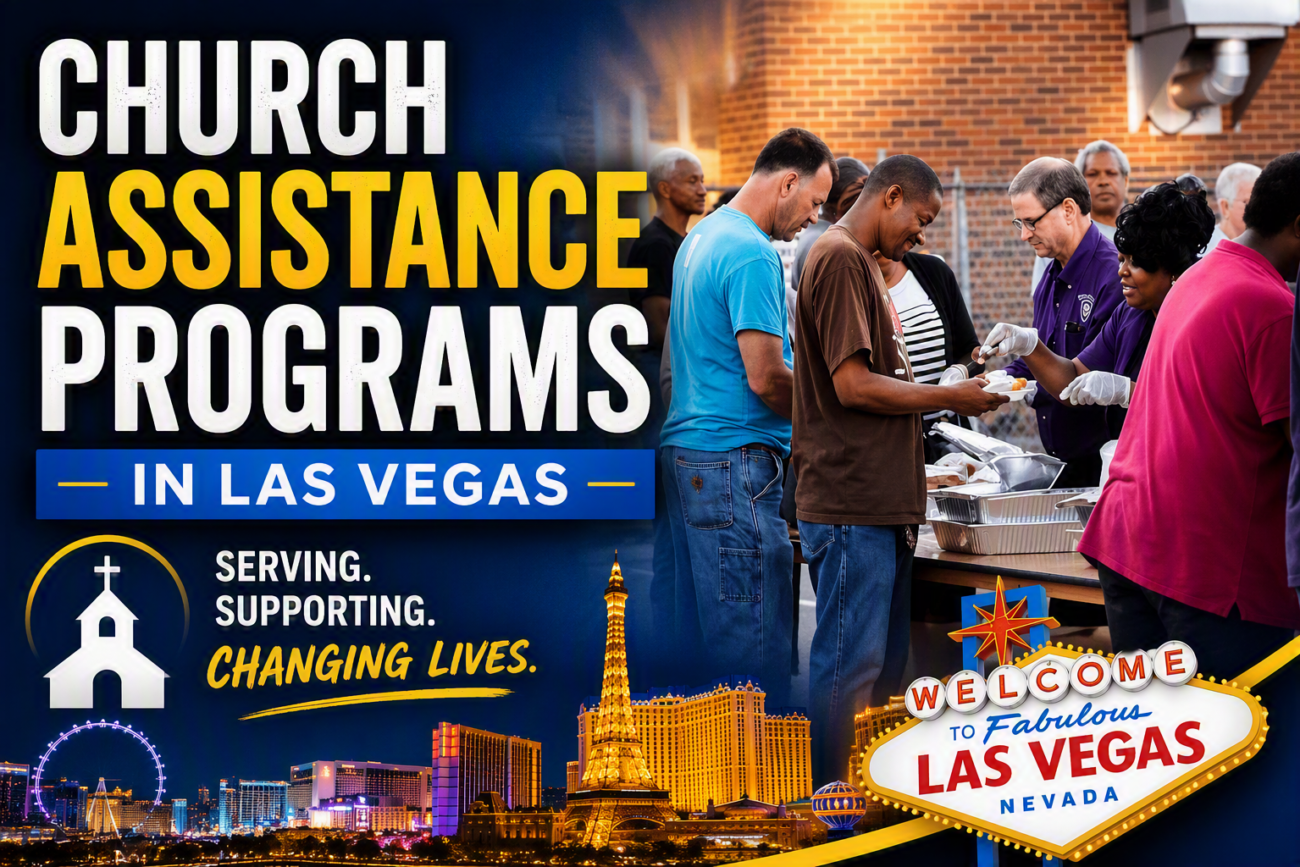
Various organizations linked to churches and faith-based community groups offer emergency resources in the Las Vegas area. These programs provide assistance—primarily for rent and utility payments, as well as emergency housing and food—to individuals and families facing financial hardship.
Major Faith-Based Church Assistance Programs in Las Vegas
These large, church-affiliated organizations manage the majority of community social services and coordinate with federal and state funding networks.
Catholic Charities of Southern Nevada
Catholic Charities of Southern Nevada (CCSN) operates 16 diverse social service programs that serve thousands of Las Vegas Valley residents daily. Headquartered at 1501 Las Vegas Blvd N, Las Vegas, NV 89101, its services are open to anyone in need, regardless of race, age, or religious affiliation.
Its core services are structured around four fundamental pillars:
Housing and Homeless Services
Although CCSN does not offer direct cash assistance for rent or utility payments, it provides housing infrastructure and guidance:
Men’s Overnight Emergency Shelter: A year-round shelter with a capacity of 400 adult men. Check-in begins daily at 2:30 p.m.
Housing Navigation Center: Offers case management and personalized assessments to help homeless individuals and families map out a path to permanent housing.
“Renewing Hope” Program for Men: A structured, employment-focused transitional program designed to help men achieve financial independence and stable housing.
St. Vincent Apartments: A complex of 120 furnished, single-occupancy apartments offering low-cost, long-term housing for independent adults over the age of 18.
Food and Nutrition Services
CCSN manages the largest food distribution network in Southern Nevada:
“Hands of Hope” Community Food Pantry: Provides staple foods, fresh produce, and essential items to low-income families. Additional note: the pantry also distributes free pet food Monday through Saturday.
St. Vincent Lied Dining Facility: A community kitchen that prepares and serves a free, hot, nutritious meal daily to anyone who comes to the center.
Meals on Wheels: The region’s largest meal delivery program, providing fresh meals directly to the homes of low-income seniors who are homebound.
WIC Program: Offers supplemental nutrition, education, and referrals to health services for pregnant women, infants, and young children.
Family services and social support
Designed to stabilize households facing sudden emergencies, job loss, or financial hardship:
Crisis Case Management: Connects families with essential resources to help them overcome temporary setbacks.
Material Assistance: Distributes baby items (diapers, formula), emergency clothing, blankets, and personal hygiene kits to those visiting its social service centers.
The Salvation Army of Southern Nevada
The Salvation Army of Southern Nevada offers a wide range of emergency infrastructure and basic needs programs to support vulnerable households throughout the Las Vegas Valley. Its local services operate from two main centers: the Lied Social Services Campus in North Las Vegas (focused on shelter and housing) and the regional Family Services offices (focused on basic financial stability).
Housing Infrastructure and Homeless Services
Most emergency housing services are centralized at the Owens Campus (35 W Owens Ave, North Las Vegas, NV 89030):
Emergency Overnight Shelter (Emergency Lodge): A free emergency overnight shelter that remains open until it reaches maximum capacity. Paid hostel-style beds are also available for $20 per night, which includes meals and access to case management services.
Day Resource Center: Open daily from 8:00 a.m. to 4:00 p.m. Individuals can access shelter from extreme heat or inclement weather, showers, hydration, and laundry facilities. A free community meal is served daily from 1:30 p.m. to 2:30 p.m.
Transitional and Reintegration Housing: Includes the Lied Apartments, offering transitional housing for up to one year while clients participate in job training programs. Features a specialized, secure dormitory for transgender individuals.
Rapid Rehousing: This program is processed and managed exclusively through Clark County’s Coordinated Entry channels.
Family Services and Financial Assistance
Emergency basic needs programs are managed by appointment at regional centers. Note: Direct cash assistance for rent and utility payments depends heavily on current seasonal funding allocations.
“Choice” Food Pantry: Operates like a grocery store where clients select items based on their household’s needs. Basic hygiene kits, baby formula, and diapers are also provided, subject to current inventory availability.
Utility Assistance for Seniors: Specific assistance funds to help low-income seniors pay for utilities.
Seasonal Programs: Include registration for the Christmas “Angel Tree” program (gift assistance for children aged 0–12), back-to-school backpacks, and “Coats for Kids” distribution.
Eligibility Requirements for Family Services
To qualify for food pantry distribution or financial assistance, households must schedule an appointment and present:
- Identification: Valid state ID or driver’s license for all adults in the household.
- Verification of minors: Birth certificate, school records, or DWSS card for each child.
- Residency: Documentary proof of an address in the Las Vegas Valley (utility bill, lease agreement, or landlord receipt).
- Social Security: Cards for each household member or an official document printed by DWSS.
Requirements for admission to family services
To qualify for food distribution or financial assistance, households must schedule an appointment and present:
Identification: Valid state ID or driver’s license for all adults in the household.
Verification of minors: Birth certificate, school records, or DWSS card for each child.
Residency: Documentary proof of an address in the Las Vegas Valley (utility bill, lease agreement, or landlord receipt).
Social Security: Cards for each household member or an official document printed by DWSS.
Lutheran Social Services of Nevada
Lutheran Social Services of Nevada (LSSN) is a non-profit organization that provides access to food, housing, and identity document recovery for low-income families, seniors, and the homeless in the Las Vegas Valley. Located at 4323 Boulder Hwy, Las Vegas, NV 89121, the organization serves individuals of any religious background.
Its main community programs focus on four distinct areas:
Food security programs
LSSN manages easily accessible nutrition programs designed to preserve the choice and dignity of clients:
DigiMart Food Pantry: A digital, client-choice pantry where clients use an electronic tablet to select products that match their household’s preferences and dietary needs, rather than receiving a pre-packed bag.
Open Air Market: Periodic outdoor distribution events offering fresh fruits, vegetables, dairy products, and baked goods.
Meals for Seniors: A nutrition program offering free group lunches and socialization opportunities for residents aged 60 and older.
Identity Document Recovery (Project ID)
One of LSSN’s most unique and in-demand services helps individuals overcome barriers to accessing employment, housing, and public benefits:
Document assistance: Helps clients obtain valid Nevada state IDs, driver’s licenses, and official birth certificates. Financial coverage: When funds allow, the program helps cover the state fees required to apply for these vital documents, which are essential for escaping homelessness or securing employment.
Housing and Support Services
LSSN offers stabilization programs to help families maintain their housing or transition out of emergency shelters:
Rapid Re-Housing: Helps homeless individuals and families by providing short-term rental assistance and case management to secure permanent housing.
Permanent Supportive Housing: Provides long-term housing combined with intensive case management for individuals with chronic disabilities or a long history of homelessness.
Eviction Prevention: Periodically provides emergency funds to cover past-due rent or utility bills, depending on active grant cycles and fund availability.
Support Services for Seniors
Designed specifically to help older adults age safely in their own homes:
Case Management: Assists seniors with processes related to Medicare, Medicaid, SNAP (food stamps), and affordable housing applications.
Resource Coordination: Connects low-income senior residents with medical transportation options, in-home care assistance, and energy cost assistance programs (such as EAP).
Requirements and Contact Information
For most services, you must provide identification and proof of current Nevada residency (such as a utility bill, lease agreement, or a referral letter from a shelter).
Main Phone: 702-639-1730
Website: lssnv.org
Office Hours: Generally Monday through Friday, 8:00 a.m. to 4:00 p.m. (food pantry and ID intake hours vary; calling ahead to confirm the day’s schedule is strongly recommended).
Local Churches with Specific Financial Assistance Agreements
Churches often channel their primary requests for financial assistance through partner regional non-profit organizations.
Canyon Ridge Christian Church
Canyon Ridge Christian Church offers a dedicated Community Care program. They collaborate directly with local agencies such as Hopelink to facilitate assistance with rent and utility bills. Residents must complete an intake form on their official website. Processing times may extend to several months due to community demand, so it is recommended to submit the application well in advance.
Address: 6200 W Lone Mountain Rd, Las Vegas, NV 89130
Important Steps Before Requesting Aid
Gather your documentation first: Almost all programs run by religious organizations require proof of your crisis situation. Have your formal lease agreement, the landlord’s written eviction notice or overdue payment notice, and your most recent utility bills ready.
Use Nevada 211: Churches often exhaust their local financial resources quickly. Calling 2-11 from a local line or visiting the Nevada 211 website gives you access to real-time information on which specific parishes or municipal funds (such as Clark County Social Services’ CHAP program) currently have the budget to accept new applications.
