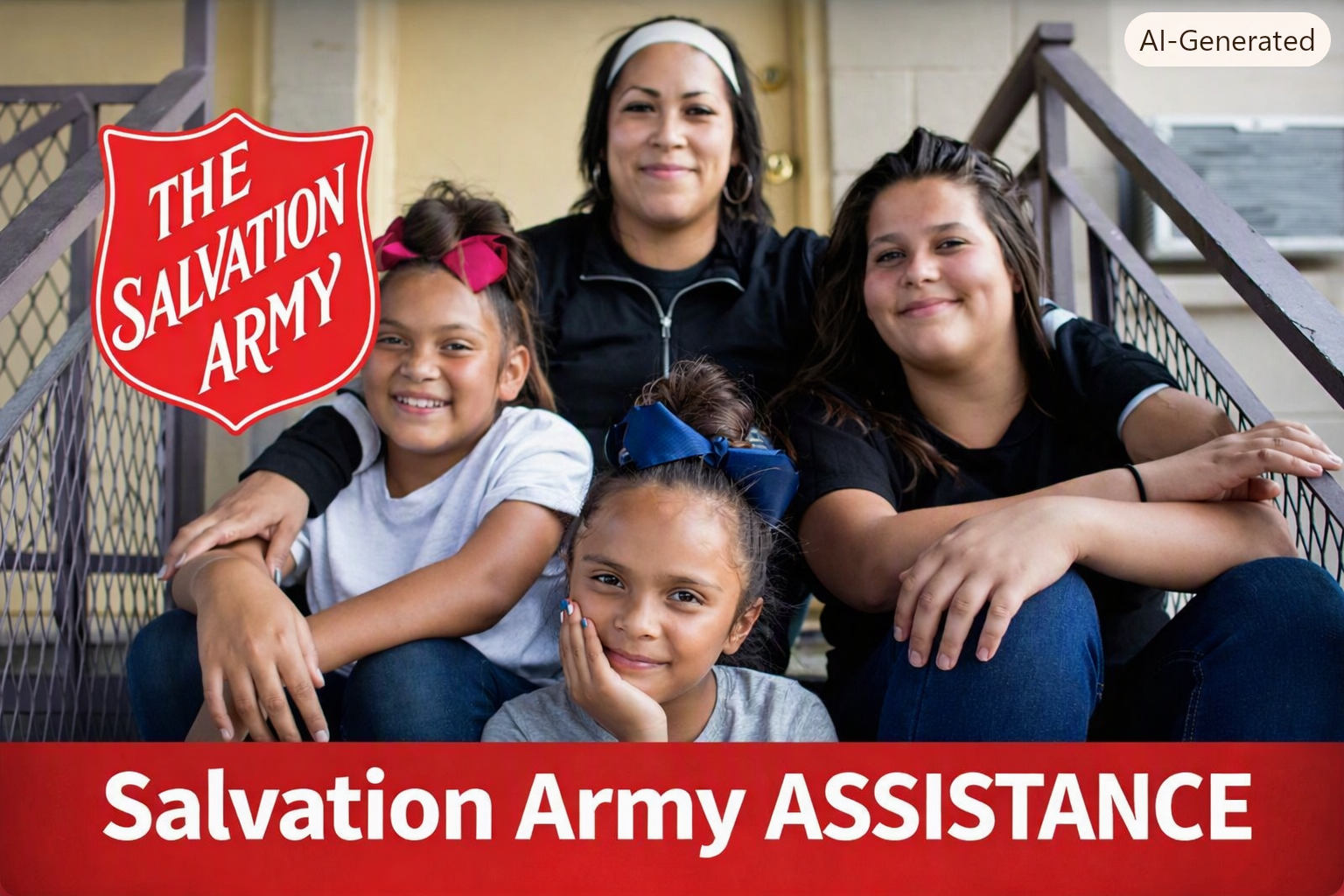
The Salvation Army offers various emergency financial assistance programs to help individuals and families overcome unexpected financial crises and maintain housing stability. Since specific funds and services are managed locally by community centers (known as “Corps”), exact availability varies by location. You can check availability and start an application directly online by entering your zip code on the official Salvation Army assistance portal.
Types of Financial Assistance Available and How to Get
Utility bill assistance
The U.S. Salvation Army offers emergency utility bill assistance, helping low-income families, seniors on fixed incomes, and individuals with disabilities avoid service disconnection. The organization coordinates directly with local utility companies to settle overdue balances and prevent service shutoffs. Assistance typically includes:
- Electricity bills: Support to maintain electricity and essential cooling during hot summer months.
- Gas and heating assistance: Emergency funds for natural gas, heating oil, firewood, or other delivered fuels to keep homes warm during winter.
- Water and sewer bills: Aid to cover overdue water bills and ensure households maintain access to safe, running water.
In many states, the Salvation Army partners with major energy companies to manage dedicated private fuel funds or donation-based safety nets. Examples include programs like “Project SHARE” or “Neighbor to Neighbor,” where utility customers donate a small amount via their monthly bills—funds that the Salvation Army then distributes to families facing imminent disconnection. Additionally, local branches often assist applicants in completing forms for state programs such as LIHEAP (Low Income Home Energy Assistance Program) or in securing grants for delivered fuels.
Generally, you will need to provide copies of a recent utility bill (showing an overdue balance), a disconnection or shutoff notice, official identification for adults in the household, and proof of household income.
Rent and mortgage payment assistance
The U.S. Salvation Army offers emergency rent and mortgage assistance, helping individuals and families avoid eviction, foreclosure, or homelessness. Since these funds are distributed at the community level through local centers (known as “Corps”), availability depends largely on local budgets.
To qualify for housing assistance, applicants must demonstrate that a short-term cash infusion will stabilize their housing situation. Key requirements typically include:
Notice of eviction or foreclosure: A legal notice to pay or vacate, a court summons, or an official warning from the lender.
Proof of future viability: Evidence that the applicant will be able to afford housing once the immediate emergency is resolved (e.g., a new job or the regular receipt of benefits).
Local residency: Documentation proving that you live within the specific zip codes served by that local Salvation Army branch.
Visit SAHelp.org or call 2-1-1 to find out if your local office currently has funds available for rent or mortgage assistance. If funds are available, you will meet with a caseworker. You will need to provide your lease agreement or mortgage statement, landlord contact information, proof of income, and evidence of a crisis situation (such as medical bills or a job termination notice). Approved payments are sent directly to the landlord or mortgage lender.
Transportation assistance
The U.S. Salvation Army offers emergency transportation assistance to help people get to work, medical appointments, job interviews, or emergency shelters. Depending on the resources of your local community center, assistance generally falls into three categories:
Public transit vouchers: Free local bus tokens, subway passes, or light rail tickets to help people get to work or essential medical appointments.
Gas cards and fuel assistance: Low-value gas station gift cards, generally reserved for individuals living in areas without public transportation who need to travel to a verified job or medical appointment.
Stranded traveler aid: Limited assistance—such as a long-distance bus ticket (e.g., Greyhound)—to help stranded individuals return home to family or stable housing, provided that shelter or a support network at the destination is verified.
Basic approval requirements
Unlike ongoing state transportation benefits, Salvation Army transportation aid is designed for short-term emergencies. Caseworkers generally look for:
- A verified appointment: Proof of a scheduled job interview, a new job start date, or a critical medical visit.
- Identification: A valid government-issued ID for the person requesting transportation assistance.
- Verification of income and need: Documentation demonstrating that purchasing a ticket or paying for gas would cause immediate financial hardship (e.g., preventing payment of rent).
Short-term housing and homeless shelter
It operates immediate, short-term overnight shelters and transitional housing programs to provide a safe environment for homeless individuals and families. These facilities focus on physical safety, nutrition (hot meals), and structured support to help residents transition to permanent housing.
Types of housing and shelter services
Emergency overnight shelters: Offer immediate, clean, and safe overnight accommodation, as well as hot dinner, breakfast, and shower facilities for individuals and families with nowhere else to go.
Transitional housing (group residences): Offers structured, semi-private housing options for several months to help residents regain financial stability, overcome substance abuse issues, or escape domestic violence situations.
Rapid Re-Housing: Provides short-term rental assistance and case management to help individuals quickly move out of emergency shelters and into permanent apartments.
Permanent supportive housing: Long-term housing solutions combined with ongoing case management for individuals experiencing chronic homelessness or living with disabling conditions.
What to expect and common rules
To ensure the safety of all residents, Salvation Army shelters typically enforce specific operating rules:
Daily intake times: Most emergency shelters operate on a first-come, first-served basis; the check-in process usually opens in the late afternoon (e.g., 4:00 PM to 6:00 PM).
Sobriety and safety policies: Many traditional shelters require residents to be sober and pass through basic security checks or metal detectors to prevent weapons and drugs from entering the facility.
Case management: Staying in transitional or short-term programs usually requires regular meetings with a social worker to develop a plan for employment, savings, and access to permanent housing. You can use the Salvation Army’s location finder tool to locate the nearest community center and check if they operate a shelter or offer emergency motel voucher programs.
Prescription and medical assistance
Many local branches offer vouchers or direct payments to participating pharmacies to cover the cost of critical, short-term medications (such as antibiotics or insulin).
Pharmaceutical Assistance Programs (PAPs): Trained counselors at certain centers help eligible patients apply directly to private programs run by major pharmaceutical companies; these programs provide free or deeply discounted brand-name medications to those who meet the requirements.
Free and student-run medical clinics: In various cities, The Salvation Army collaborates with university medical schools or local hospitals to operate free walk-in clinics—such as the UKSAC Clinic or the Birmingham Free Clinic—offering primary care, basic dental services, and pharmacy services to the uninsured.
Financial assistance and Salvation Army clinic pharmacies will never cover or dispense narcotics, opioid painkillers, or any federally controlled substances. Individuals who already have comprehensive coverage through Medicaid, Medicare, or private employer-sponsored health plans may not qualify for certain emergency prescription medication grants.
Food banks and soup kitchens
The Salvation Army USA operates thousands of food banks and soup kitchens across the country to provide free food and hot meals to anyone experiencing food insecurity. These programs are open to individuals, families, seniors, and the homeless, with no religious requirements for receiving assistance. You can find the nearest food distribution center by entering your zip code into The Salvation Army’s Food Assistance Directory.
Emergency food banks: Food is distributed as “food boxes” or bags containing non-perishable items (canned goods, rice, pasta) and often fresh produce, meat, or dairy products, depending on local donations.
Soup kitchens: Gathering places where hot, nutritious breakfasts, lunches, or dinners are served, either daily or on specific days of the week. Mobile feeding units: Mobile kitchens or food trucks that travel to specific neighborhoods, encampments, or disaster zones to deliver hot meals directly to those unable to travel.
Holiday food baskets: Special distribution events providing all the ingredients needed for Thanksgiving and Christmas dinners.
Note: Due to high demand, most Salvation Army food banks limit distribution to one food box per household per month or every two weeks, although daily emergency rations may be available.
Back-to-school assistance
The Salvation Army partners with national retail chains like Walmart to collect community donations of backpacks, folders, pencils, and notebooks [Organizations host back-to-school events featuring free supplies; free school supply distribution begins in the Houston area]. These items are sorted into complete school kits and distributed directly to registered families.
Many local branches partner with retailers or operate clothing distribution centers to provide children with school uniforms, winter coats, and everyday clothing—whether new or gently used. Unlike daily soup kitchens, back-to-school distribution programs require advance registration during the early summer months (typically June through early August).
Winter Clothing
To protect vulnerable individuals from extreme cold, local centers organize annual winter clothing drives and distribution efforts. Autumn collection drives invite the community to donate coats, heavy jackets, snowsuits, gloves, scarves, and thermal hats—either new or used but in good condition.
Families facing severe financial crises can meet with a Salvation Army caseworker to receive vouchers redeemable for free clothing at the organization’s thrift stores (Family Stores). During sudden winter storms or sharp drops in temperature, local centers often distribute blankets, thick socks, and thermal clothing to people experiencing homelessness.
Holiday Meals
The Salvation Army organizes large-scale community meal events during major holidays to ensure no one goes hungry during these times.
Thanksgiving and Christmas Dinners: In-person community holiday meals hosted at local Salvation Army community centers, soup kitchens, or partner facilities, open to anyone seeking a meal or companionship.
Holiday food boxes: Eligible low-income households can sign up to receive a holiday food basket—including turkey or ham, side dishes, stuffing, and baking ingredients—enabling them to prepare a traditional meal at home.
Partnerships with Meals on Wheels programs: In select regions, volunteers deliver hot, ready-to-eat holiday meals directly to homebound seniors and individuals with disabilities.
Angel Tree
The Angel Tree program provides new clothing and toys to millions of children across the country who otherwise would not receive gifts during the holidays. Parents or guardians register their children (typically aged 0 to 12) in early autumn, providing clothing sizes and holiday wish lists. These “angels” are placed on trees in corporate offices, local shopping malls, or online via the Salvation Army’s Angel Tree portal. Community donors “adopt” an angel, purchase the items, and deliver them to the Salvation Army for distribution.
Registration typically opens in September or October and closes quickly. Missing the deadline usually results in being placed on a waiting list, as gift allocation depends directly on community adoptions.
Summer camps and after-school activities
Local community centers provide safe spaces for students, offering homework help, tutoring, nutritious snacks, sports, and creative arts activities. Fees are low, and many centers accept state childcare subsidies or offer income-based scholarships.
The Salvation Army operates dozens of overnight summer camps in wooded, natural settings across the country. Children from low-income families can attend a week of outdoor activities (such as swimming, hiking, and archery) at greatly reduced rates—subject to income verification—or through full sponsorship.
Income-based housing for seniors
Operating under the U.S. Department of Housing and Urban Development (HUD) Section 202 federal program, these independent living apartments cap rent costs at exactly 30% of the resident’s adjusted gross monthly income. Applicants generally must be 62 years of age or older and meet strict low-income limits established by HUD for that specific county. The facilities typically feature secure access systems, on-site laundry, community social rooms, and service coordinators who help residents access local medical care, nutrition programs, and transportation.
Kroc Centers
Ray & Joan Kroc Corps Community Centers are large-scale, state-of-the-art recreational, arts, and educational facilities built thanks to a historic legacy from philanthropist Joan Kroc. Most Kroc Centers feature indoor aquatic centers (slides, lap pools), gymnasiums, basketball courts, performing arts theaters, and computer labs.
True to Joan Kroc’s vision that all children should have access to excellent facilities, Kroc Centers offer free or deeply discounted day passes and monthly memberships to individuals and families demonstrating financial hardship. You can locate these facilities in the national Kroc Center directory.
Adult Rehabilitation Centers
The Salvation Army’s Adult Rehabilitation Centers (ARCs) offer a comprehensive, free residential program for individuals seeking to overcome substance abuse and chemical dependencies. The ARC program is a completely free, six-month residential program funded entirely by donations made to Salvation Army thrift stores. It provides housing, regular meals, group therapy, spiritual development, and comprehensive life-skills training. Individuals may apply for admission on their own or be referred by the courts. To find an available spot or check admission criteria, visit SATruck.org or call the appropriate intake lines directly.
How to Find Your Local Salvation Army Office
The fastest way to find your local Salvation Army office is to use their official online search tools. Since services are organized by specific geographic zones, your zip code determines which office handles your requests for assistance.
You can locate your assigned center using the official directories listed below:
Online Search Tools
For emergency financial assistance (rent, utilities, travel): Go directly to The Salvation Army’s assistance portal (SAHelp.org). Enter your zip code to find the specific local office that handles emergency financial assistance requests.
For other community services (food, shelters, youth programs, senior housing): Use the main U.S. Salvation Army location finder. You can search by ZIP code, city, or state to view a map and directory of nearby locations.
For addiction recovery centers: If you are specifically looking for a free residential rehabilitation center, use the Salvation Army’s Adult Rehabilitation Center (ARC) directory to find local intake offices.
Other ways to locate an office
Call 2-1-1: If you do not have reliable internet access, call 2-1-1 from any phone. A local United Way resource specialist will instantly look up the address, phone number, and current funding status of the Salvation Army location serving your neighborhood.
Search local maps: Open the navigation app on your phone (such as Google Maps or Apple Maps) and type “Salvation Army Corps Community Center.” This will show physical locations near you; however, you should always call first to verify that your specific ZIP code falls within their service area.
